

Flower Findings: Yuri Reception in RPGs Among Chinese Players
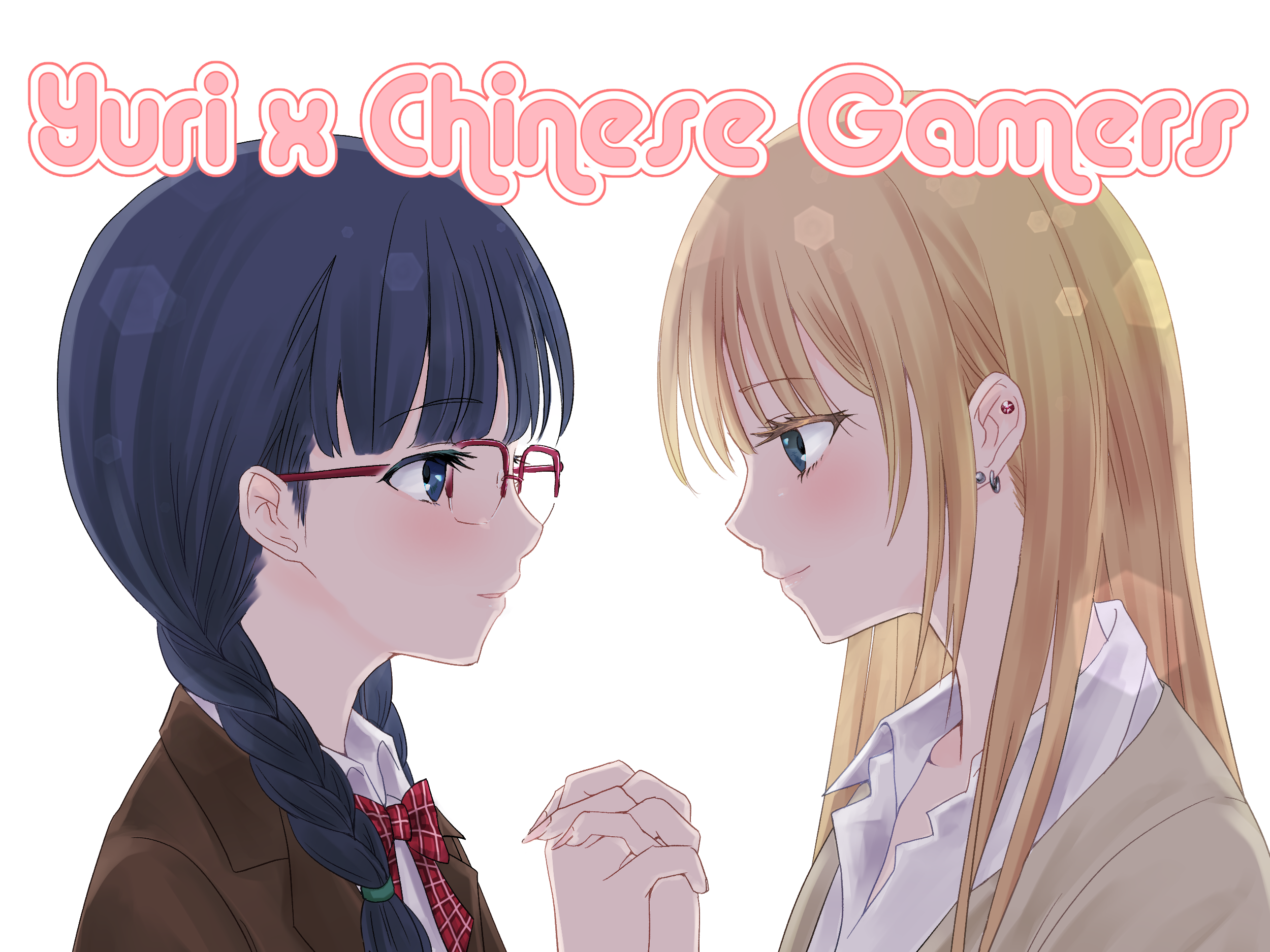
Hello again! Been a while. This blog post will be a lot shorter than our usual ones, but we wanted to share something interesting we found.
…huh? What’s that? Don’t know what “yuri” is? That’s fine, feel free to read the next section. I’ll summarize it for you. If you’re already familiar with it, feel free to skip it. Just look for the next set of really big letters.
Yuri 101
Don’t know what yuri is? Well, yur-in luck. (I’m sorry, won’t do that again.)
Yuri is a genre of works of fiction centered around girls’ love (GL), or romantic/deep relationships between female characters. While not all yuri works feature romance, all works share the same deep, intimate bonds between one or more female leads.
Yuri (kanji writing: 百合) literally translates to lily, the flower. While lily flowers are a common Japanese name, nowadays they also have a strong connection to romance centered around female couples. The exact specifics of how this came to be can be found here in this Wikipedia article, if you’re interested.
To make a clear distinction, yuri does not usually encompass Japanese moe culture - or cute things/people being cute for the sake of cuteness. While there can be some overlap depending on the setting or creator intent, oftentimes the overlap falls between the fan bases of the two. Girls are generally better at being cute, I suppose.
Want some examples? Here’s some yuri-themed RPG games you can do “research” on later.
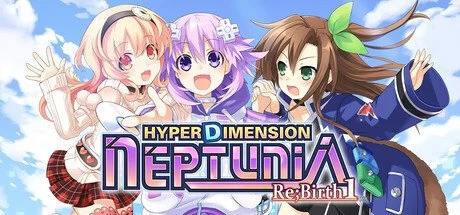
The Hyperdimension Neptunia series
A clever pun on the Japanese side, most games feature a Lily Rank system where the girls build connections with each-other.
What was lily in Japanese again…?
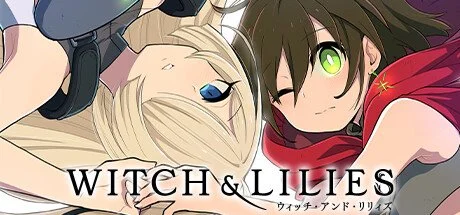
Are you sensing a theme here?
Still, while the mechanics are solid, do keep in mind this game was last updated over a year ago. Proceed with caution.
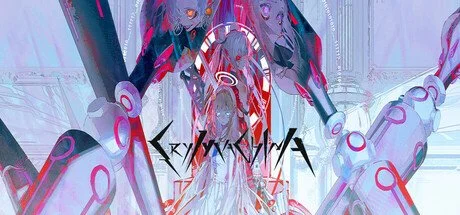
Unfortunately, I haven’t gotten around to playing this one.
However, the reviews do generally say the writing and characters in this game are great. Just beware the story.
Findings
With that out of the way, let’s get right to the results. We ran a poll on our Chinese HeyBox account with a simple question.
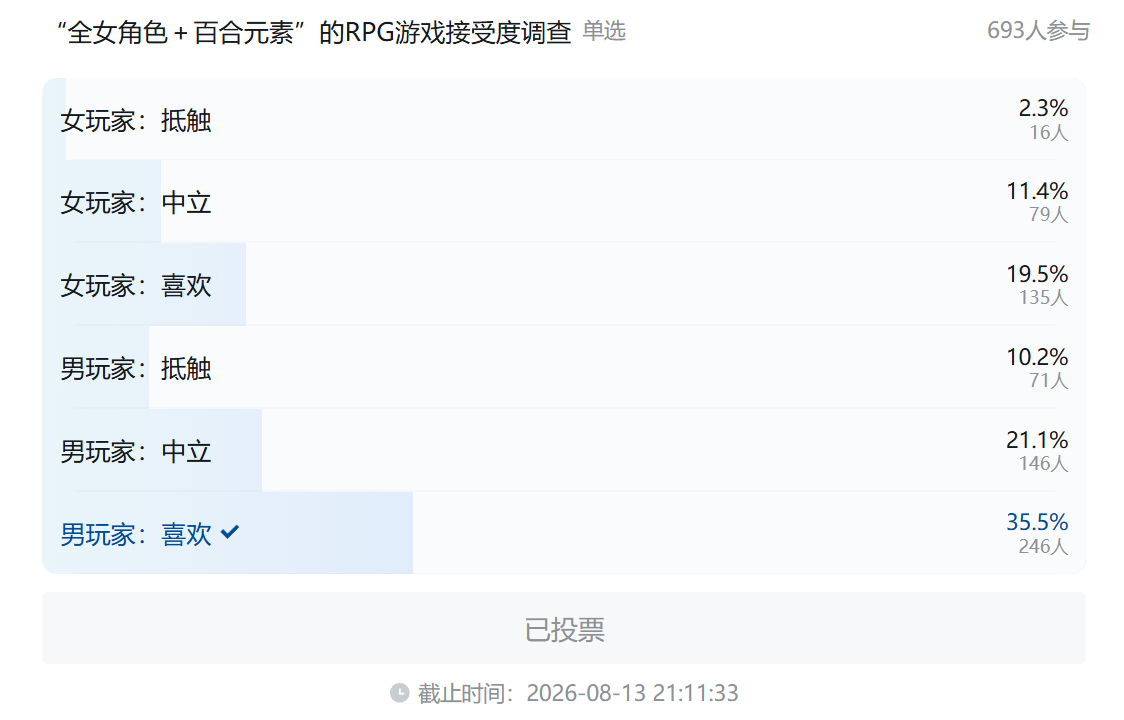
Here’s the translation, from top to bottom:
“All Female Cast + Yuri Elements” in an RPG Acceptance Survey 1,238 responses
Female Player: Resistant 2.3% with 28 respondents
Female Player: Indifferent 11.4% with 137 respondents
Female Player: Supportive 19.9% with 246 respondents
Male Player: Resistant 9.5% with 118 respondents
Male Player: Indifferent 20.8% with 258 respondents
Male Player: Supportive 36.4% with 451 respondents
We got the following findings:
In total, there were 411 female respondents compared to 827 male respondents. The ratio of female respondents to male respondents was 1:2.
We can also gather the general ratio of support. Amongst female respondents, the ratio of support (resistant:indifferent:supportive) is 1:5:10. For every 10 supporting respondents, 1 was resistant.
Amongst male respondents, the ratio of support changes significantly. The ratio becomes 2:4:7. For every 7 supporting respondents, 2 were resistant.
Overall, it seems like among the more prevalent male respondents, support for full-on yuri RPGs is a lot lower compared to the female respondents.
When marketing games to this demographic, it’s best to keep this in mind. Remember, all demographics are different, and positioning your game accordingly is key to success.
Until next time.
Bonus: Positioning Primer
Oh, you’re still here?
I know we usually do a bonus for these, but I really don’t have anything this time. I could try to guess why any of this may be the case, or lecture you that this is good or bad, but I won’t do any of that. It’s rude to make assumptions of people you don’t know, and make claims you can’t back up.
Instead, how about we talk about positioning again? Positioning is the art of shaping how people perceive your game. If you highlight certain aspects of your game more prevalently than others, people will develop expectations in kind.
For example, if you keep focusing about the “death game” (think Danganronpa) part of your game’s story, people will in turn expect that it plays a pivotal role across the game. By strategically emphasizing (or de-emphasizing) parts of your game, you can develop customer expectations.
The key is understanding the exact balance between what you emphasize. Character driven RPGs may emphasize the characters a lot, but will still tease mechanics and worldbuilding here and there to attract people interested in the RPG part if the game has a solid foundation. Or, they may choose to deflect from the mechanics entirely if it’s a walking simulator kind of game.
Remember, a great aim for a game developer is to overshoot your customers’ expectations. That way, it feels like they got value or found a diamond in the rough. It builds positive social capital as well as benefits your brand. But, set your customers expectations too low, and very few will “bite” - er - buy your game. Manage positioning wisely and aim for the sweet spot!
